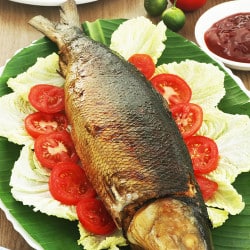
Equipment
- spatula
- Spoon
- chopping board
Ingredients
- 1 tablespoons soy sauce
- 1 tablespoons lemon juice
- 2 tablespoons oil
- 1 small onion, chopped
- 2 cloves garlic, minced
- 1 2 inch carrots, finely chopped
- 1 piece small potato, small cube
- 1/4 cup raisins
- 2 tablespoons pickle relish
- 1 tablespoons tomato paste
- 1 tablespoon soy sauce
- 1 tablespoon water (if needed)
- salt to taste
- 1/4 cup flour
- 1 large egg
- nonstick oil for spraying
Instructions
Please see notes on how to Debone the Fish
Marinate the Skin
- After taking out the meat, marinate the skin with soy sauce and lemon juice. Marinate overnight.
Cook the Filling
- Heat cooking oil in a pan and saute’ onion and garlic
- Add in the potato and carrots and cook until wilted and soft.
- Add the cooked fish meat and celery, raisins, and pickle relish.
- Season with soy sauce and add the tomato paste. I mentioned one tablespoon of soy sauce, but start with 1/2 tablespoon and add accordingly.
- Add the flour and let cool.
- When the filling is excellent, add egg and mix until the egg is incorporated into the filling.
Fill the Fish
- When the filling is cold, fill the fish using a spoon.
- Push filling to the end of the tail and fill towards the head.
Bake the Bangus
- Preheat oven to 400 F. When the fish is filled, brush the skin with nonstick oil and spray the tin foil with nonstick oil, then bake the bangus for 20 minutes.
How to Debone Milkfish for Rellenong Bangus
- I was in 6th grade when I tried deboning Milkfish and really, I had no idea how to do it- I should have listened well during that Home Economics class when I got that seminar. Fast forward to the present and there are just rampant instructions on how to debone Bangus and really, it is very easy doing so.
- I think, just like me, people get hesitant to debone bangus because you think that the skin and the fish is frail and weak, and very easy to tear but Milkfish skin is tougher than it let up and looks.
Tools to debone Fish
To debone Milkfish you need a few types of equipment that you may already have at home: a spoon, spatula, and a chopping board.
Spoon: you need a spoon to scale the fish. Do it from the tail and work your way to the head.
Chopping board: Cleaning Bangus can be a messy task, so you need to have a place where you can set the fish so blood doesn’t splatter everywhere.
Spatula: Use this to remove the meat from the skin.
What is Bangus (Milkfish)
Bangus is a national fish in the Philippines. It is called milkfish in English. This fish is known for its mild, gentle fresh flavor and soft white-colored meat. Bangus is loathed by its bony interior lining to its meat but loved on its soft and delicious meat. When complementary ingredients like cheese, carrots, onions are added to its meat, it is a meal by itself.
Bangus are bred in fish farms in the Philippines and are used for a variety of dishes. Just like Rellenong Bangus, Bangus Nilagpang, Tinolang Bangus, and Sinigang na Bangus (these menus are coming soon on the blog, so wait for it.)
How Do you Debone Bangus for Relleno Step by step
Deboning Bangus for Relleno can be cumbersome. But with this step-by-step instruction with videos and photos, you can make deboning this fish easier.
- Set the Bangus /milkfish on a flat surface and using a spoon, scrape the scale going from the fishtail to the body of the fish. ( Gently scrape as scales tend to fly all over)
- Remove the gut and gill through the top opening. ( this can be bloody, so bear with it).
Break the spine by folding the spine near the fish head.
Break the tail by folding until it cracks.
Using a spatula, scrape the meat close to the skin. Gently scrape the meat from the top to bottom.
Push the whole meat out and reserve for Rellenong Bangus filling.
When you are done deboning the fish, marinate the skin for late use or, prepare the Relleno filling.
How to store
- When you don’t have time to cook this meal right away, place the skin in a tight container and freeze. When ready to use, thaw the skin and marinate.
- Store the fish meat too in a container or zip lock and freeze. Thaw when you are ready to use them.
Leave a Reply