Ingredients
- 310 gramsJapanese short-grain rice (2 cooker cups, see note)
- 1 ½ cupscold water
- 4 tablespoonsrice vinegar
- 3 tablespoonsgranulated sugar
- 1 teaspoonsalt
Instructions
- Put 310 grams Japanese short-grain rice in a sieve over a bowl and rinse it with cold tap water.
- Use your hands to remove the excess starch from each grain by using a gentle rubbing motion.
- When the water that runs off is mostly clear, drain the rice.
- If you’re using a rice cooker, add the washed rice to the cooker’s bowl and add cold water to just under the 2-cup line. If you’re using the stove, add the washed rice to a small heavy-bottomed non-stick pot, then add 1 ½ cups cold water and cover it with a lid.
- Let this soak for at least 30 minutes before you start cooking it. This allows the grains to soak up water before cooking, resulting in shinier rice with a better texture.
- If you use a rice cooker, turn it on and let it do its thing. If you are doing this on the stovetop, turn the heat to high and bring the water to a boil (be careful not to let it boil over). Turn down the heat to low and set a timer for 15 minutes. Once no liquid remains in the pot, turn off the heat and let the rice steam for 10 minutes.
- While you wait, combine 4 tablespoons rice vinegar, 3 tablespoons granulated sugar, and 1 teaspoon salt in a small bowl. You can microwave it for a bit to help dissolve the sugar.
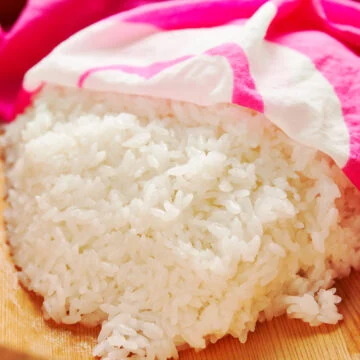
- When the rice is done, dump it into a large bowl or sushi oke (the wooden bowl in the photo). The key is that you want a container with a lot of surface area to spread the rice out to cool it rapidly. Gently break up any clumps, then pour the vinegar mixture evenly over the hot rice.
- Use a shamoji (rice paddle), spatula, or a flat wooden spoon to gently combine the rice and vinegar using a side-to-side cutting motion followed by a folding motion. You want to separate each grain so seasoned vinegar coats every surface, but you don’t want to break the rice grains or mash them together.
- While mixing, use a fan or a clean hairdryer set to cool and blow air on the rice. This cools the sushimeshi and helps the excess liquid evaporate quickly, giving it a nice sheen while keeping it from getting mushy. It’s a bit tricky mixing and fanning simultaneously, so a second set of hands can be helpful here.
- The sushi rice is done when the surface is no longer wet and slippery, and each grain is shiny. It will still be lukewarm, but it should not be hot.
- Mound up the sushimeshi and cover it with a damp towel until you’re ready to use it.
Leave a Reply