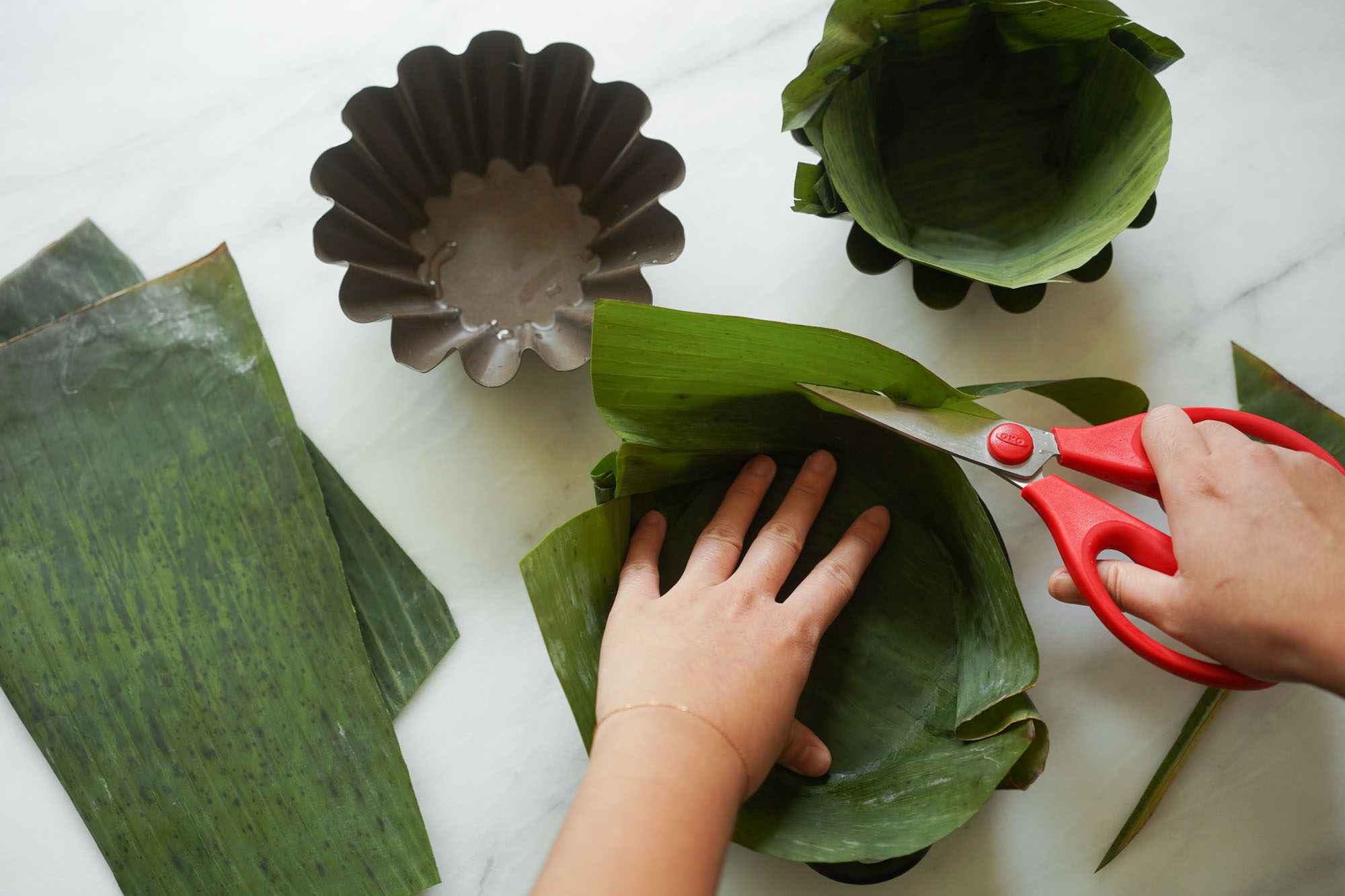
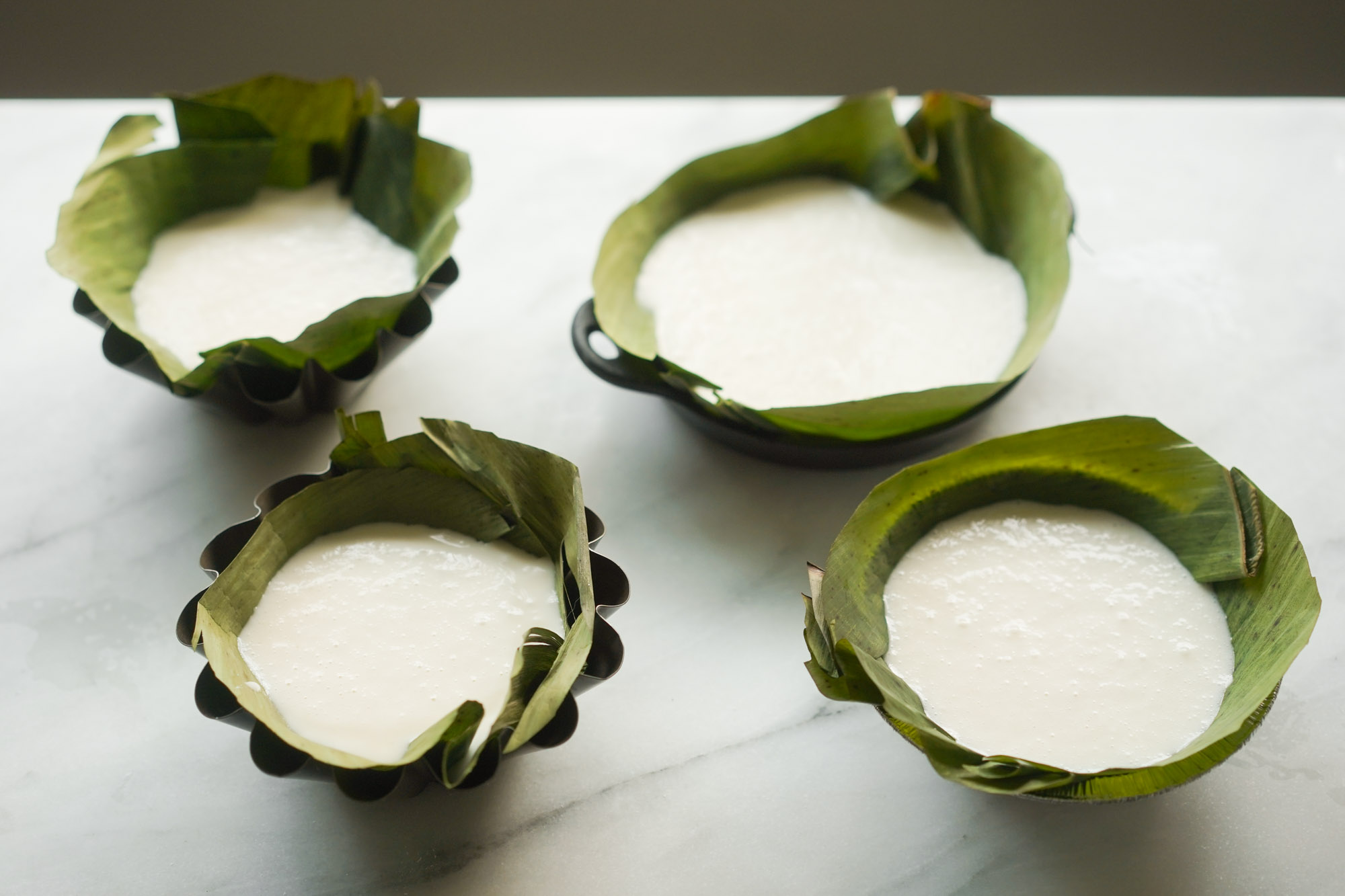
Carefully clean the banana leaves under running water, making sure not to rip them. If your banana leaves are tough, carefully warm them over a warm stove making sure not to have the fire or electric burners touch the banana leaves (or they will burn). Once the leaves are soft and moldable, line the molds with banana leaves. You can use scissors to cut off the excess banana leaves around the edge.
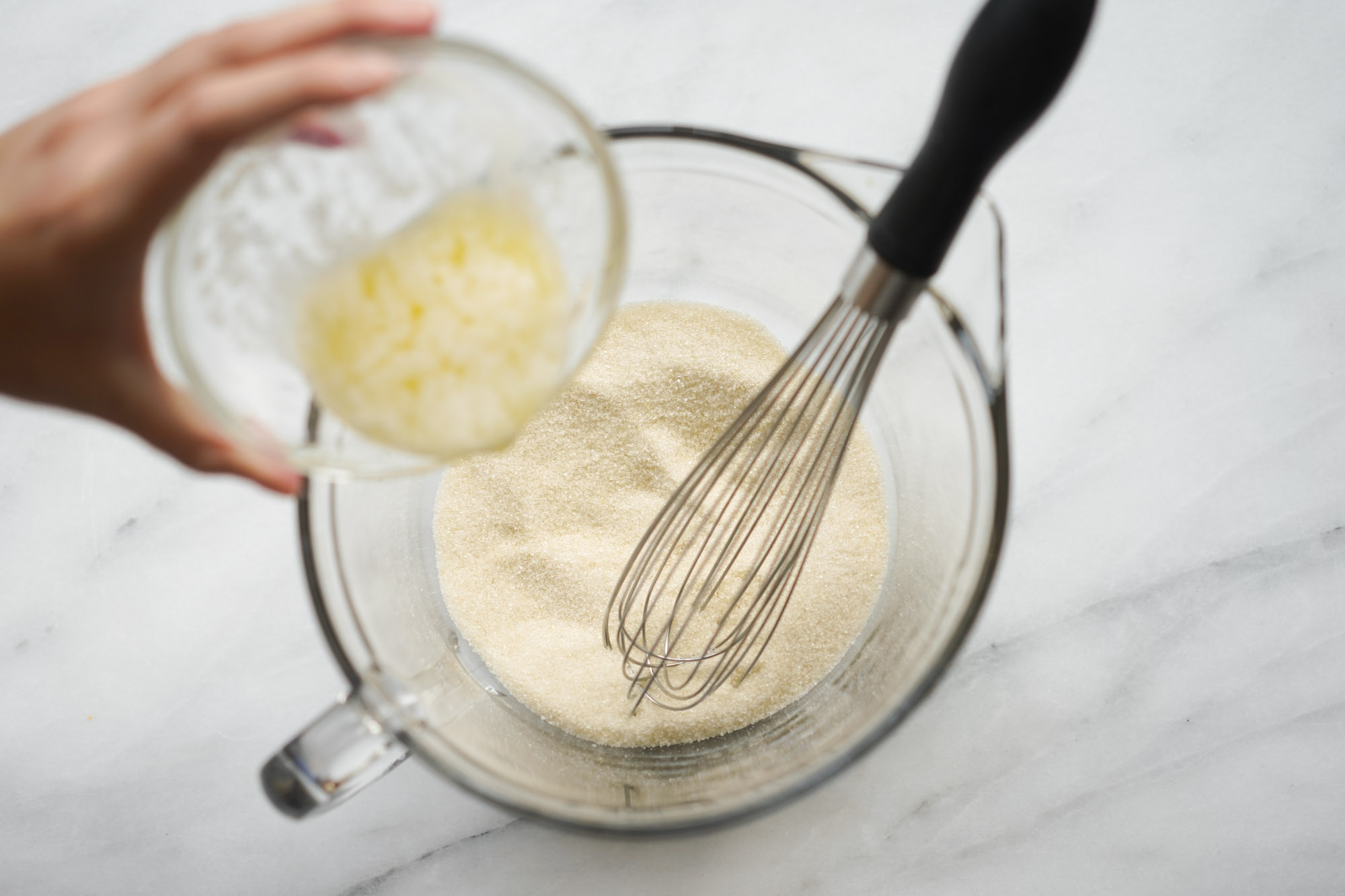
In a large mixing bowl, cream together the melted butter and sugar until combined.
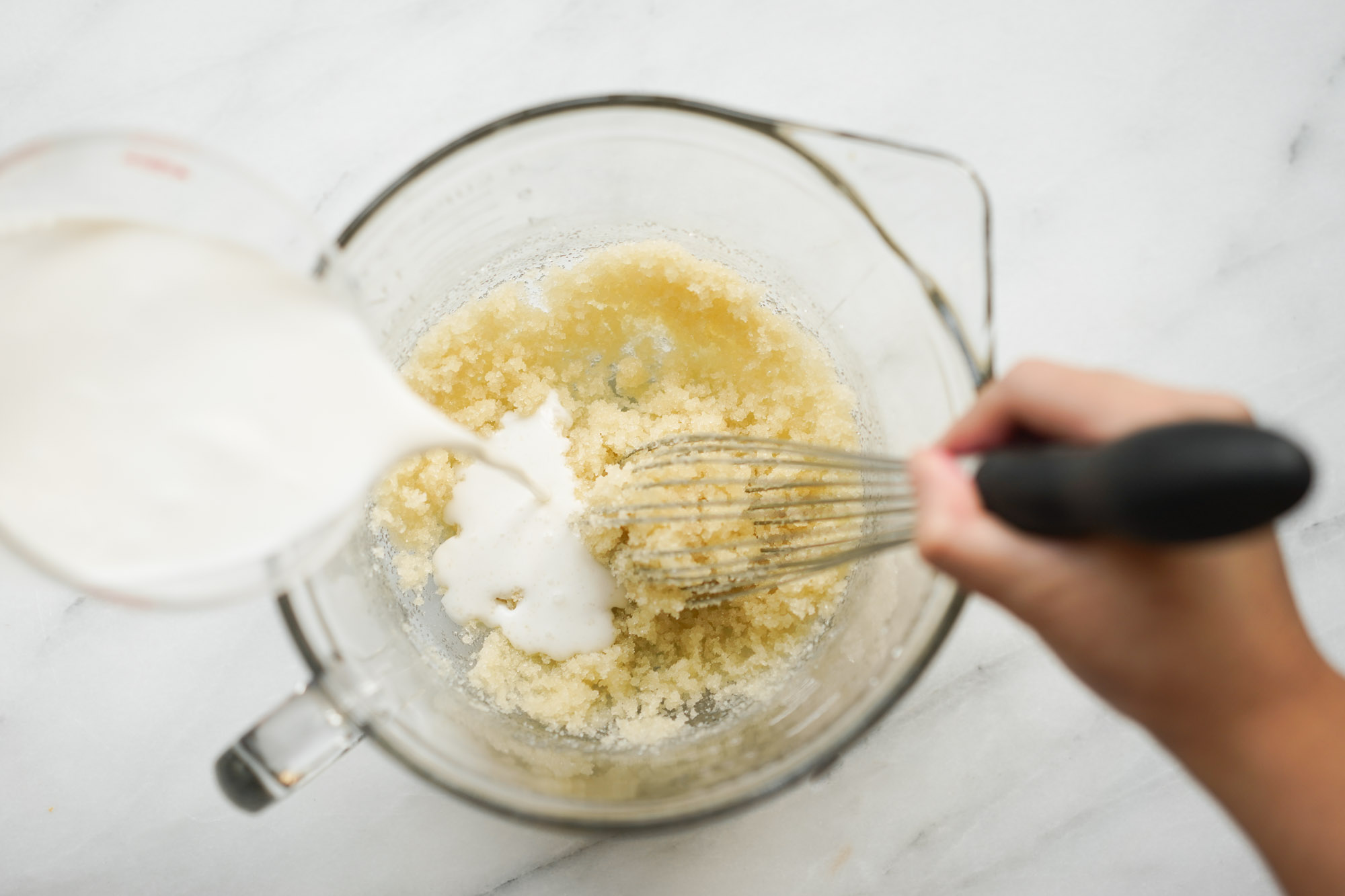
Pour the coconut milk and whole milk and whisk until combined.
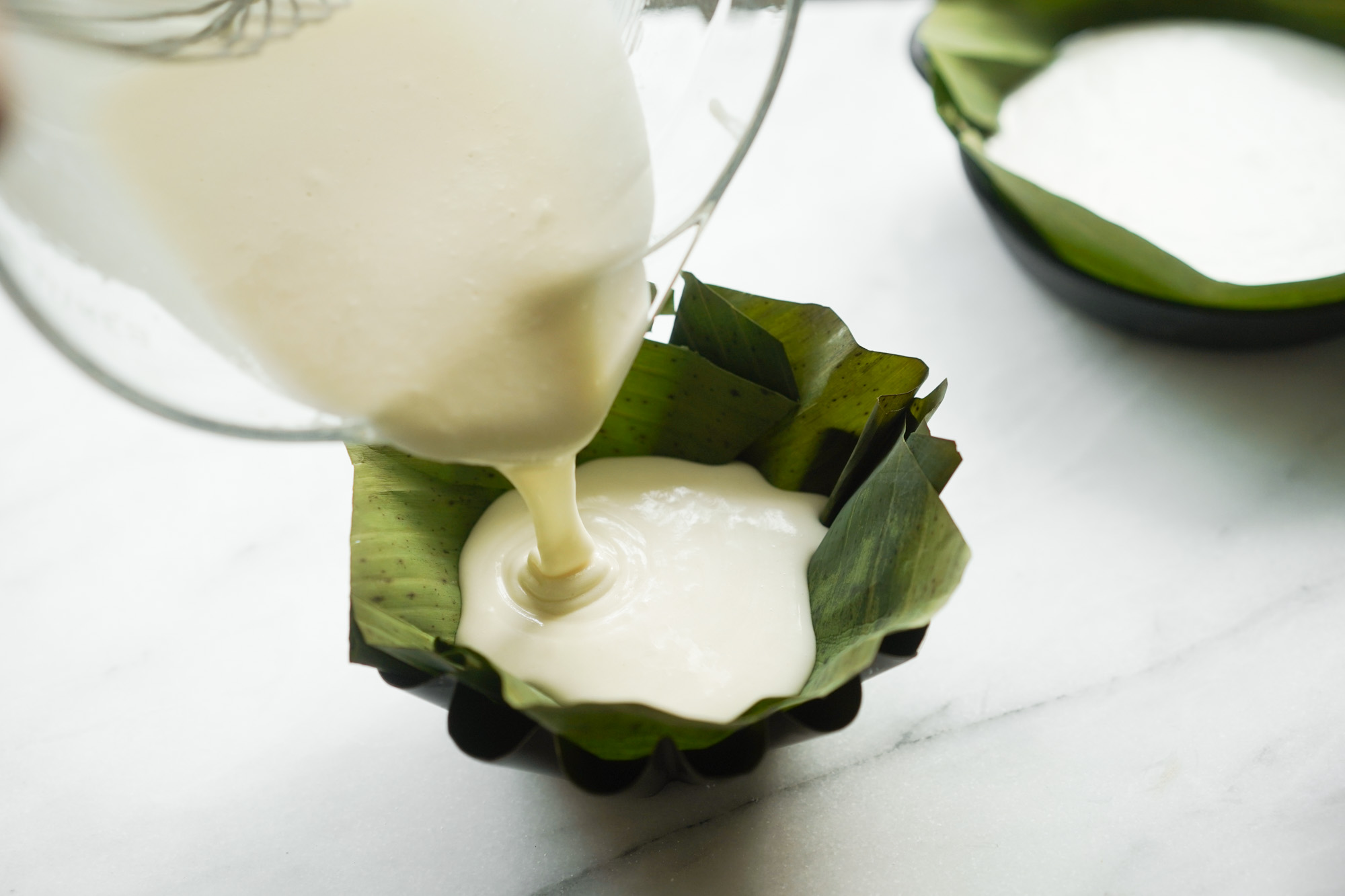
Sift the rice flour, baking powder, and salt into the wet ingredients. Whisk together the ingredients until there are no more lumps. Pour the batter into the molds about 80% of the way up.
Put the molds on a sheet pan to help stabilize the bibingka. Put the molds and sheet pan into the oven.
After 9 minutes, add the salted egg topping to the bibingka and continue to bake for another 10 minutes. **NOTE: for coconut shreds, wait until 11 minutes to prevent burning the coconut. For cheese topping, wait until 19 minutes before adding to prevent burning the cheese.
After 19 total minutes bake time, rotate the bibingka molds 180° to promote even baking since the back of the oven is usually hotter. Cook for an additional 5 minutes.
Test the bibingka by pushing a cake tester or toothpicks into the middle of the bibingka. If it comes out clean, the bibingka should be done. If it’s wet, continue to cook for an additional 2 minutes and then check again. The bibingka should be firm in the middle and slightly golden on the top, but not burned.

Leave a Reply